Chega! William assina ordem de emergência retirando a Camilla todos os privilégios relacionados com as Joias da Coroa – H
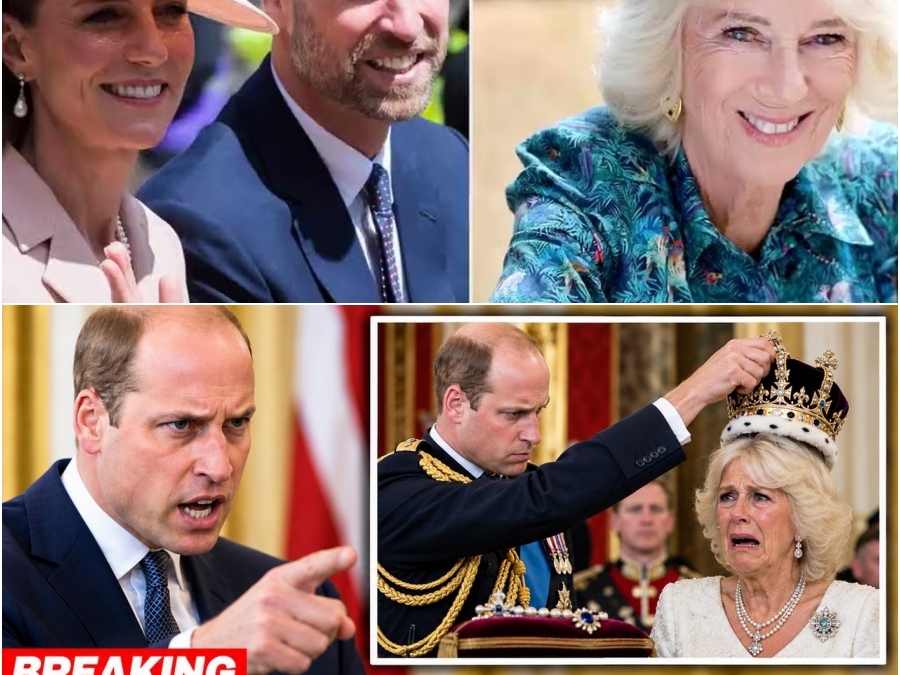
I think it’s safe to say that change is on my agenda. Change for good. And I embrace that and I enjoy that change. I don’t fear it. ; The pen touched the page, and with one signature, Prince William crossed a line no one inside the royal household believed he would ever cross. This was not a warning, a private rebuke, or another carefully worded palace compromise.
It was an emergency order aimed directly at Queen Camilla’s access to the Crown Jewels. An act so personal, so symbolically explosive, that even those standing closest to the monarchy understood the consequences instantly. Before we go deeper into what this really means for the royal family, make sure to subscribe so you don’t miss a single update.
William did not rush the moment. He sat alone after the final briefing, reread the last paragraph, and let the silence settle before signing the emergency royal household directive. In this dramatized scenario, that directive was an internal order controlling ceremonial access during a crisis. It immediately suspended every Crown Jewels privilege assigned to Camilla, including access connected to state ceremonies, official portraits, and regalia.
The Royal Collection, meaning the body responsible for caring for objects held for the monarchy, would receive the document under sealed protocol. These pieces were not simply expensive possessions. Crowns, tiaras, necklaces, and historic jewels could signal rank, trust, continuity, and closeness to sovereign authority.
Taking away that access was not administrative. It was a message. Camilla felt the message when the sealed communication reached her. She opened it, read the first page twice, and her expression hardened. The queen lowered herself into a chair and asked the aide beside her only one question. “Has the king seen this?” The answer changed everything.
Charles had been informed, but the order was not his. That distinction cut straight into the family. The king had not personally stripped her privileges. William had acted through the emergency mechanism, placing father, son, and queen on opposite sides of the same document. The shock deepened when Camilla reached the scope of the suspension.
This was not about one disputed necklace. The order froze every jewelry privilege attached specifically to her until a formal review could be completed. William knew how severe that sounded. He kept the pen in his hand after signing, staring at his name as if he understood that family life would not return easily to what it had been.
Then came the detail that changed everything. Camilla learned the signature had not been spontaneous. Weeks earlier, one incident had pushed William toward this decision and someone inside the family knew the breaking point had been reached. But to understand why he would risk a fracture at the heart of the monarchy, the story must move beyond the order and into the loyalties colliding behind palace doors.
Behind the titles were three people trapped inside relationships far older than the order William had just signed. A son carrying memories he could never completely separate from duty. A father determined to protect the stability of the life he had finally built. And a queen who had spent decades surviving judgment only to discover that the most painful challenge might now come from inside the family itself.
Charles read the emergency order without speaking. The king reached the final page, removed his glasses, folded them carefully, and left the aide standing opposite him in silence. The directive, an internal instruction setting temporary limits on ceremonial privileges, carried consequences far beyond jewelry.
Camilla’s royal standing had become part of how he understood his own reign, because diminishing her publicly could look like a rejection of decisions he had defended for years. Finally, he looked down at the signature again. “He should have spoken to me one last time.” Charles said quietly. The anger was restrained, but the disappointment underneath it was unmistakable.
Camilla felt something colder than anger once her staff had gone. She dismissed everyone, closed the door, and remained alone with the document. Losing access to historic pieces did not threaten her comfort or wealth. That was not the wound. Within royal ceremony, those jewels carried messages about trust, status, continuity, and acceptance.
To have that access suspended meant someone close to the future of the crown believed a boundary had been crossed. She had spent years proving she could withstand public hostility. Now, the queen consort was facing something more intimate. Rejection from inside the family itself. William carried a different burden.
He did not see himself only as a son confronting his father’s wife. The prince believed he was also protecting the system he would one day inherit. And that meant every symbolic decision forced him to choose between keeping peace today and preventing confusion tomorrow. That choice had already begun costing him.
When Catherine entered the room later, he told her the order had been signed. She had sensed his frustration building for weeks, but she had not known when he intended to act. William watched her face carefully. “I couldn’t keep pretending this would settle itself,” he said. Catherine did not answer immediately.
She had understood his concerns, but the finality of the signature changed everything. The princess knew that a procedural dispute could now become a family rupture, and she also knew Charles would be forced into a choice no father wanted. Challenge his son openly and expose division, or remain silent and allow Camilla to absorb the humiliation alone.
Charles understood that choice just as clearly. He could defend his wife and risk turning the monarchy’s private fracture into a public confrontation, or he could let the order stand and watch trust collapse behind closed doors. But the real beginning of this crisis lay weeks earlier. One ceremonial evening had produced a private confrontation so sharp that William would later identify it in a documented account prepared during the internal review as the moment everything changed.
And when the story returns to that evening, the emergency order suddenly stops looking impulsive because the first real fracture had already happened. Every royal crisis has a moment that only looks important afterward. A sentence spoken too sharply. A door closed too quickly. A disagreement everyone expects to disappear by morning. In this story, that moment came during preparations for a major ceremonial engagement when a dispute over one historic piece of royal jewelry became something far larger.
By the end of the evening, William was no longer arguing about jewels. He was arguing about boundaries. Camilla had asked that a historically sensitive necklace be added to her planned state banquet ensemble, even after objections surfaced during the household review. A state banquet is a formal royal dinner held for visiting heads of state, and every detail carries diplomatic and symbolic weight.
That was why the request mattered. The necklace was not simply expensive or beautiful. Its history tied it to a specific ceremonial setting. And William believed moving it outside that context weakened the very rules meant to protect the meaning of royal symbols. William asked for 10 minutes alone with her. The prince waited until the aides had gone, then told Camilla that the argument was no longer about what could technically be worn.
It was about whether any boundary could survive if every objection could be negotiated away behind closed doors. He kept his voice controlled, but the frustration had been building for too long. To him, the process mattered because once personal preference began overruling institutional limits, the same conflict could return again and again. Camilla did not raise her voice.
That made the response sharper. She told him she had spent years performing duties, absorbing criticism, and carrying the burden of a role that had never been easy. The Queen Consort said she would not accept being treated as though her place remained provisional every time someone disagreed with her judgment.
Then she slid the jewelry folder across the table. “I will not debate my place in this family through an inventory of jewelry.” William did not back away. He answered with the sentence that would later define the entire crisis. “Then we need rules that cannot be negotiated room by room.
” Camilla stared at him for a long second, closed the folder, stood, and left without another word. The future king remained behind, knowing the disagreement had crossed into something deeper than ceremony. Charles heard about the confrontation that same evening. The king was briefed privately, but instead of summoning William at once, he chose to wait, believing the anger would cool by morning.
That silence mattered because his son read it very differently. William took the delay as proof that informal appeals would change nothing. By the next morning, he had quietly requested a formal review of ceremonial privileges. What began as paperwork soon produced an option nobody expected him to use, emergency suspension.
The trigger had finally been pulled. But when William and Camilla next stood face-to-face, the dispute would no longer concern a necklace. It would concern authority itself. There were no cameras, no courtiers arranged along the walls, and no ceremonial language left to hide behind. William entered knowing Camilla had already read the order.
Camilla waited knowing he had personally signed it. For the first time since the crisis began, the future king and the queen stood opposite one another with nothing between them except a table, a sealed document, and years of unresolved emotion. Camilla had asked for the meeting as soon as the directive reached her.
William agreed, but only on the condition that no household officials attend the first part of the conversation. A household official is a senior staff member who helps manage royal duties, protocol, and private arrangements. And keeping them outside mattered because neither side wanted carefully managed language anymore.
She wanted the suspension withdrawn before anyone beyond the inner circle discovered it. He wanted something very different. An admission that the old informal system had failed. And that ceremonial boundaries now had to be written, clear, and enforceable. Camilla did not soften the accusation. She told him the order felt less like administration and more like punishment.
The Queen pushed the document toward him across the table. But he did not touch it. William answered that the issue was trust. If rules only lasted until someone powerful objected, then they were not rules at all. The prince insisted that the problem had grown because too much had depended on private understandings that could be ignored whenever they became inconvenient.
Camilla’s anger sharpened. She asked him one question that changed the temperature of the room. Would he have signed the same order against someone else? William paused. Too long. The silence landed harder than any argument. She looked at him as if the hesitation confirmed what she feared.
That however carefully he framed the decision, some part of it was personal. Charles entered after the private exchange had already hardened both sides. The King immediately understood that this was no misunderstanding he could dissolve with reassurance. He placed one hand on the table between them. But neither looked toward him. Camilla wanted the order lifted.
William refused. Charles asked whether the directive could at least be paused while they negotiated. William said no. The answer was quiet, but its meaning was enormous. For the first time since the crisis began, father and son were openly standing on opposite sides of a royal decision. And the Queen was caught directly between them.
Charles now faced a question far more dangerous than family anger. Did William actually have enough practical authority to make the suspension hold? The confrontation had exposed the wound. Now the machinery of the monarchy would decide whether his signature was merely defiant or devastatingly effective. Royal power often looks simplest from the outside.
A king reigns. A queen wears the symbols of monarchy. An heir waits. But behind every glittering ceremony sits a web of custodianship, household authority, protocol, precedent, and personal approval. William’s emergency order had forced that hidden machinery into motion. And as Charles examined exactly what his son had done, one uncomfortable truth emerged.
Reversing the decision would create consequences of its own. Charles studied the briefing in silence while a senior courtier waited across from him. The document relied on a dramatized household protocol, a temporary internal safeguard allowing ceremonial access to be frozen while questions about custody, authorization, or designated use are reviewed.
That distinction mattered because the order did not mean William personally owned the Crown Jewels or could dispose of them as private property. It meant access could be controlled through palace procedure and that made the dispute far more complicated than a family quarrel over jewelry. Charles felt his frustration deepen with every page.
The king could see how carefully the directive had been written. It looked procedural, measured, and temporary. That made it harder to overturn without appearing to bypass the very safeguards meant to protect royal assets. He closed the folder, rubbed his forehead, and looked toward the courtier. So stopping this now creates a second crisis.
The answer was not reassuring. Reversing the suspension too quickly could look like personal intervention. Allowing it to stand could humiliate Camilla further. William received word that his father was examining ways around the order. The prince did not feel triumphant. Catherine saw that immediately. She found him tense, distracted, and quieter than usual.
Carrying the weight of a confrontation he had once believed would remain institutional. He told her that forcing Charles into a corner had never been the objective. She reminded him that once procedure touches family, intention stops controlling the damage. The pressure tightened when the household confirmed that the suspension would remain in place until the review was finished.
Camilla’s ceremonial arrangements now had to be rewritten. Jewelry schedules changed. Inventory requests were withdrawn. Security instructions shifted. Wardrobe preparations had to be altered. Each change pulled another staff member into the secret. And every new person who understood the pattern increased the danger of exposure.
Camilla learned that pieces already under consideration were being removed from planning. The queen understood immediately what that meant. This was no longer a threat on paper. The order was beginning to reshape her public role in practical, visible ways. Then, one altered jewelry request drew attention beyond the inner household.
The order had survived its first challenge. But secrecy was about to become impossible. Because royal symbolism only remains private until somebody notices what is suddenly missing. The first consequence was almost invisible. A jewelry case remained unopened. A planned piece disappeared from a ceremonial schedule.
A staff member was told to revise an arrangement without explanation. Yet, inside the palace, everyone understood what those tiny changes meant. William’s order was no longer theoretical. Camilla was now living under it. And the reality of that humiliation hit far harder than the language of the document ever could.
Camilla received the revised instructions before her next engagement and immediately noticed what had changed. Several historic pieces that had previously been under consideration were gone from the approved list. An approved list is simply the final selection of royal items cleared for official use.
But in this moment, it carried far more weight than paperwork. Each removal meant the suspension was no longer hidden inside a file. It was shaping what she could wear, how she would appear, and what the public might eventually notice. Camilla stayed with her trusted dresser after everyone else left. The Queen looked at the reduced selection, lifted one approved brooch, held it for a moment, then placed it back. She closed the case herself.
“I’ll wear something of my own.” She said quietly. The choice mattered because she was refusing to let the altered list turn into a public measure of her standing. But beneath that resolve was humiliation. She could feel the dispute moving from private protocol into her daily life. Charles understood the danger immediately.
The King knew that every changed appearance invited scrutiny because royal jewelry is watched closely and repeated patterns are noticed quickly. If he stepped in publicly, he could defend Camilla, but expose the family conflict. If he stayed silent, he protected the institution’s appearance while leaving his wife to absorb the consequences alone.
He chose silence. Camilla felt that silence deeply. She had expected resistance from William, but she had hoped Charles would draw a line somewhere. Instead, the Queen interpreted his restraint as abandonment. The wound widened. William was feeling the cost, too. Catherine told him that whatever his institutional reasoning, the result had become intensely personal.
The prince did not argue. He said he knew exactly what the order was doing to Camilla, but knowing that did not erase the problem that had forced the confrontation in the first place. Catherine heard the conflict in his voice. He was not celebrating. He was enduring it. Then the secrecy began to crack. A last-minute jewelry alteration reached journalists who regularly track royal appearances, and questions started circulating about why familiar historic pieces had suddenly vanished from planning.
Staff whispers became press curiosity. Curiosity became pressure. Camilla had finally had enough of speaking through documents and intermediaries. For days, everyone had spoken through aids, protocol, and sealed instructions. Now she wanted the one thing the machinery could not provide, an answer from William with no one else in the room.
When Camilla asked to see William again, she made one condition clear. No officials, no legal folders, no Charles, and no discussion prepared by advisers. This time, she did not want to challenge the order. She wanted to understand the man who had signed it. William agreed. What followed was quieter than their first confrontation, but far more important because once the anger drained away, both were forced to confront what the crisis had really been carrying underneath.
Camilla entered without the fury that had defined their last meeting. The Queen wanted no institutional buffer between them, meaning no staff, no formal process, and no carefully filtered language standing in the way of what needed to be said. That mattered because the dispute had already moved beyond jewelry. It had become a test of belonging, trust, and whether family relationships could survive once royal authority entered the room. William spoke first.
The prince told her the emergency action was never meant to humiliate her in public. He said years of private negotiation had produced too many exceptions, too many unclear understandings, and too much room for the same argument to return. To him, the order was supposed to force permanent boundaries where informal promises had failed.
But as he spoke, he could hear how cold that reasoning sounded against the human cost sitting directly in front of him. Camilla did not let him escape into procedure. She told William that whatever he had intended, the message she received was simple. After years of service, duty, and scrutiny, she could still be pushed outside the family when the pressure became intense.
The Queen said losing access to jewels had never been the deepest wound. The deeper wound was discovering how quickly symbolic acceptance could be withdrawn. William did not defend that consequence. For the first time, he admitted he had underestimated how the order would feel once it left the page and entered daily life.
The prince still believed the system needed to change, but he accepted that the method had turned reform into personal punishment. That concession shifted everything. Camilla leaned forward and gave him a way out. She would accept a permanent written framework governing ceremonial jewelry, but only if the rules applied to every senior royal without exception.
William listened, then answered carefully. “Do not make me your exception,” she said. “Then there cannot be exceptions,” he replied. Camilla did not smile, and William did not soften the principle, but the anger was gone. The future king agreed that once the new framework was approved, the emergency suspension could end.
The rule would remain. The personal sanction would not. For the first time, peace felt possible. But beyond that private room, fragments of the crisis were already reaching the public. Inside, the conflict had finally begun to shrink. Outside, the story was about to explode. By morning, the family’s private conflict belonged to everyone.
What had begun with a sealed order and a closed jewelry case now dominated television panels, newspaper columns, and crowds gathering outside royal gates. The palace could no longer control the emotional meaning of William’s decision. Every missing jewel became evidence. Every expression became a clue.
And one front page transformed the internal dispute into a national symbol almost overnight. Charles received the morning papers before the palace communications team had settled on a response. The king looked down at one front page showing William and Camilla side by side beneath the words “Crown Divided.” A palace communications team is the group responsible for handling official messaging and public statements.
And this time, even they were trapped. Saying too much risked exposing private conversations. Saying too little allowed speculation to grow. Charles studied the photograph for several seconds, folded the paper until the headline disappeared, then pushed the stack away without finishing his coffee. William reacted with frustration rather than satisfaction.
The prince had wanted clear rules, not a public morality play about loyalty, resentment, and family history. Coverage split almost instantly. Some commentators treated the dispute as a question of accountability and whether ceremonial privilege should follow written rules. Others focused on the personal fault line between William, Charles, and Camilla, turning years of family tension into the dominant frame.
Catherine told him that once royal symbols are used to settle an internal dispute, the public will always read meaning into them. He knew she was right. And that made the spectacle harder to accept. Outside Buckingham Palace, the story became tangible. Copies of the fictional Crown Divided front page were held above the crowd, while broadcasters repeated the phrase throughout the morning.
The empty velvet setting pictured beside the portraits became the image everyone remembered. Camilla saw the coverage, too. The queen understood that the humiliation she had feared was now public, but she also knew something the viewers did not. Privately, the path toward ending the suspension had already been agreed. Behind closed doors, the final framework was completed.
The new written rules restored Camilla’s ceremonial eligibility, while replacing informal discretion with a standardized approval process across senior royal households. In plain terms, no one would simply rely on private understandings anymore. Requests, permissions, and exceptions would follow the same structure, and that mattered because it transformed the crisis from a personal punishment into a permanent institutional change.
Charles was told the agreement was ready. William received the same confirmation. Camilla knew her access would return. The only question left was whether restored privileges could repair what the confrontation had damaged. The world had seen the fracture. Now the monarchy had one final chance to define what that fracture ultimately meant.
The crisis ended not with another dramatic signature, but with three people accepting that none of them could return to the arrangements that existed before it. William had forced a boundary into writing. Camilla had forced him to confront the human cost of doing so. Charles had been forced to accept that protecting family peace by postponing difficult decisions could create an even greater rupture.
The crown survived, but every person involved emerged changed. Charles met William privately before the final settlement was announced. The king told his son that the method had wounded people who should never have been made to feel like collateral damage. William did not fight the criticism. The prince admitted that the emergency order had become more personal than he intended.
But he also told his father that avoiding the dispute for so long had made decisive action almost inevitable. For once, neither man tried to win. They simply accepted that silence had helped create the crisis. Camilla received confirmation soon afterward that the suspension had been formally lifted. The queen could once again use designated royal pieces for official occasions, but under a different system.
The new ceremonial jewelry framework, a written process governing approvals, historic restrictions, exceptional requests, and review procedures, now applied across senior working royals. That mattered because her access had returned without restoring the old ambiguity. She was no longer being singled out, but neither would anyone else be allowed to depend on private exceptions.
Camilla understood the difference at her next major ceremonial appearance. She chose a restrained historic piece, approved under the new process, not the most dramatic jewel available. The decision carried quiet dignity. She had regained her place, but she was not treating the moment as victory over William.
The queen was accepting something larger. Belonging would now exist inside rules that applied to everyone. William noticed immediately. The future king looked toward her before the ceremony began and saw the approved piece in place. Their eyes met. He gave a small nod. Camilla returned it. No apology was spoken. None was needed.
The settlement itself had become both apology and boundary. Charles saw the exchange and understood what had changed. His marriage had survived. His relationship with William had survived. But both had survived only because he finally accepted that refusing to choose was itself a choice. The king had learned that peace protected through delay can become conflict protected by silence.
What began as an emergency order stripping one queen of royal privileges ended as something more consequential. William discovered that protecting the crown could wound the people beneath it. Camilla discovered that belonging could not depend on exceptions. Charles discovered that leadership sometimes begins where avoidance ends.
The jewels returned, the rules remained, and the monarchy moved forward, not because the conflict had been erased, but because, finally, it had been resolved. Thanks for watching. Please don’t forget to like and subscribe, and we will see you in next one.