O Rei Carlos desligou o telefone na cara da Rainha Camilla quando Tom Parker Bowles foi banido da propriedade de Sandringham – H
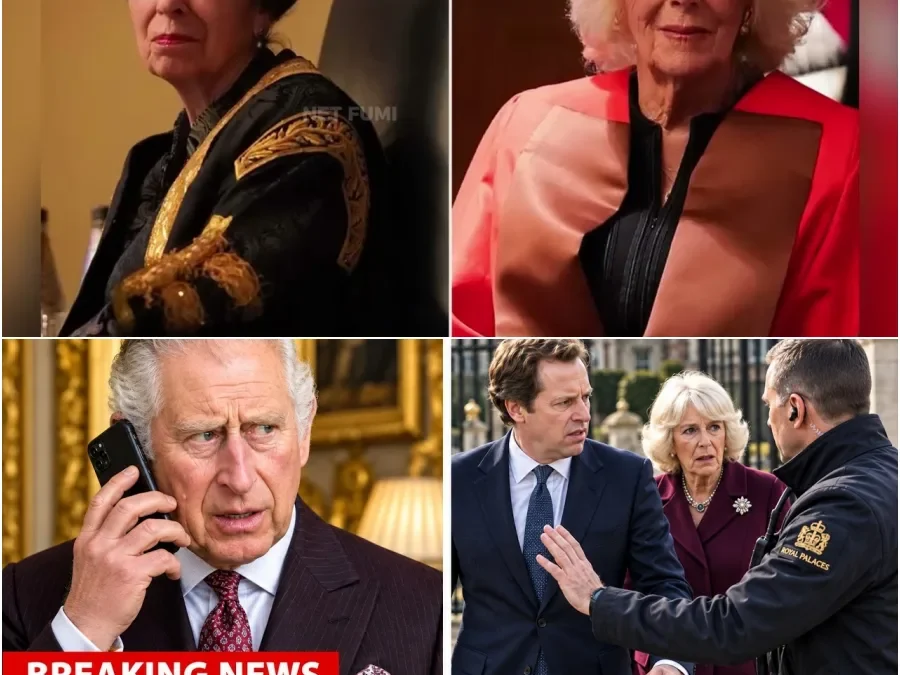
Today, you and I are going to unpack a scandal that started with an abruptly ended phone call. Courtiers initially brushed it off as just another minor disagreement between husband and wife. However, hushed voices echoing through the palace corridors told a completely different story. King Charles had allegedly hung up on Queen Camilla.
Within days, an even more unbelievable revelation began to circulate. Word on the estate was that Tom Parker Bowles, Camilla’s own son, had been permanently banned from stepping foot on the grounds of Sandringham. It sounded absolutely impossible. Yet, it quickly transformed into a massive crisis for the monarchy. Before we dive into the true impact this will have on the House of Windsor, hit that subscribe button to catch every single update.
Palace officials desperately tried to spin the incident as a routine domestic dispute, the sort of minor friction that happens behind the heavy oak doors of any powerful family. But, this was the House of Windsor. In this world, a revoked invitation, a sudden silence, or a name quietly scratched off a guest list carries the crushing weight of royal history.
Sources claim the fateful conversation between the King and his Queen started calmly, masked by the careful, polite restraint that dictates royal marriages. Yet, right in the middle of that dialogue, the atmosphere turned ice cold. Those close to the crown suggest that Charles, a monarch already buckling under the immense pressure of his reign, finally snapped.
The King reached a breaking point where the survival of the crown mattered more than keeping the peace, ending the call before Camilla could smooth things over. The aftermath was far more chilling than any formal press release. Household staff instantly felt the temperature drop.
Aids who usually gossiped freely suddenly measured every word. Palace veterans knew the rhythms of Sandringham well, and they realized immediately this was no passing storm. The estate is a fortress of royal memory, holiday tradition, and historic inheritance. Hearing that Tom Parker Bowles was allegedly banned from these sacred grounds sent a crystal clear message.
This was never just about one man. It was about drawing an absolute line in the sand. The emotional toll of this alleged banishment would have been devastating for Camilla. Her son was not just being locked out of a country house. He was being forcibly removed from the center of the monarchy’s private universe.
For Charles, making such a harsh call brought its own profound agony. For decades, the king had desperately juggled his personal affections with his ruthless royal duties. But that fragile act was now shattering in plain sight. The absolute silence from the communications office only poured gasoline on the fire.
Without a swift denial, the sensational story ran wild. Nervous courtiers and royal experts alike started asking the exact question the palace was dreading. Had this explosive confrontation actually been brewing in the shadows for months? Was the truth buried under fake smiles, lavish ceremonies, and deeply choreographed photo ops? As the dark rumors multiplied, an undeniable reality began to take shape.
This was no spontaneous outburst of anger from the king. It appeared to be the very first crack in a brutal, behind-the-scenes war for power, influence, and the ultimate direction of the new reign. While that initial severed phone call lit the match, the fallout proved this was infinitely more complex than a standard domestic argument.
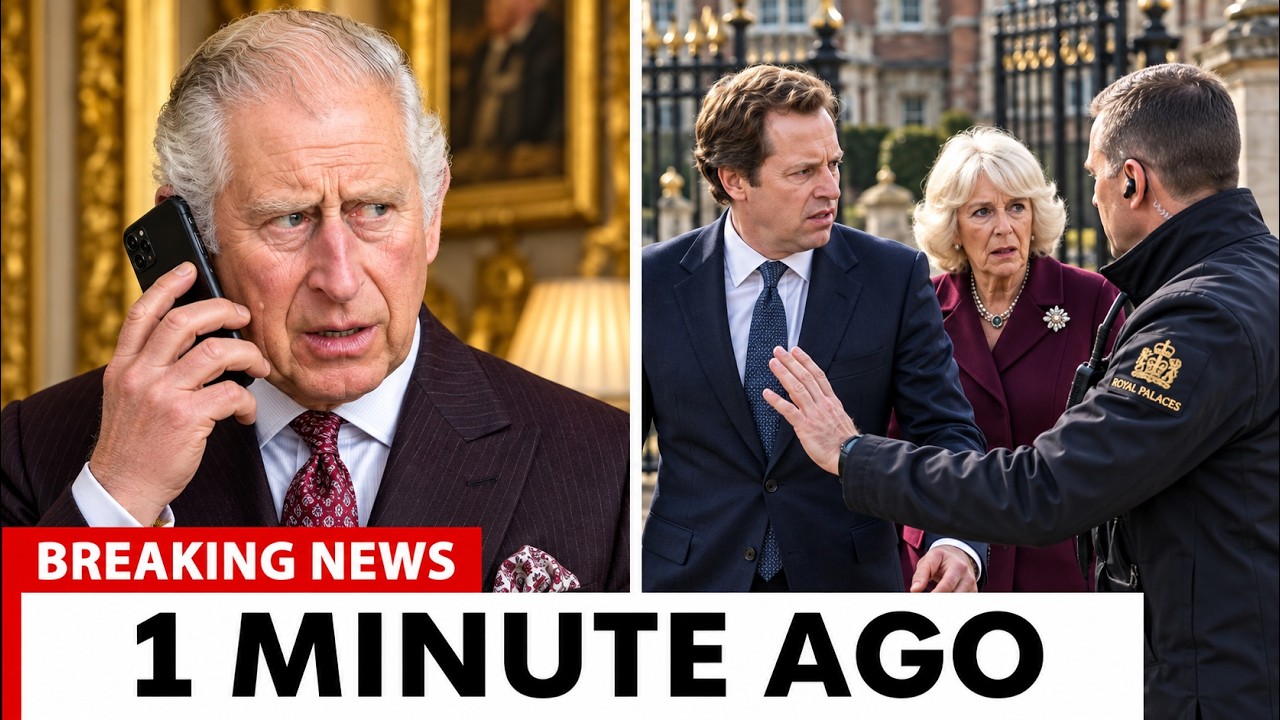
Sandringham is not merely a piece of real estate. For generations, it has stood as the ultimate private sanctuary for the sovereign. Hearing that a member of Camilla’s own bloodline had triggered such a severe internal crisis sent absolute shockwaves through the highest levels of society. Grasping the sheer weight of this rumored banishment requires looking closely at what this historic estate truly means to the monarchy.
It is not a casual home where guest lists shift based on fleeting emotions. It is a rare sanctuary where the rigid institution of the crown bleeds into deeply personal family history. This is the place where pure bloodlines, heavy public duties, and centuries of tradition smash together. For decades, its walls have absorbed the joy of Christmas mornings, the sorrow of royal deaths, and the quiet, unrecorded choices that altered the course of history.
So, when palace insiders began leaking that Tom Parker Bowles was suddenly entangled in serious debates about security, protocol, and physical boundaries, the narrative turned distinctly sinister. The growing anxiety behind closed doors had nothing to do with a single ruined dinner party or a misplaced invitation.
It was entirely about the dangerous optics of unlimited access. In the cutthroat world of the royals, securing a regular spot at Sandringham is monumental. It broadcasts absolute trust, unbreakable acceptance, and a level of intimacy that almost always translates to real political influence. That specific overlap is exactly where the internal panic reportedly, ignited.
Even though Camilla’s children are fiercely loyal to her, they do not shoulder the backbreaking duties of the working monarchy. They are civilians, not sworn protectors of the throne. That boundary might seem incredibly harsh to an outsider, but in this ancient system, those lines dictate survival. High-ranking courtiers allegedly raised alarms that the strict borders protecting the monarchy’s inner sanctum were getting too blurry.
Hard questions were suddenly being asked in hushed tones. Who actually possessed the right to stand in these rooms? Which individuals truly deserved a seat at these historic traditions? There was a mounting fear that certain outsiders, simply by walking through the right doors, were gaining a perceived level of supreme authority the sovereign never officially authorized.
These were not innocent debates. They struck at the very core of the king’s legacy. Sandringham dictates exactly who holds power when the press cameras are turned off and the ruthless plotting begins. That is why the sudden isolation of Camilla’s son sparked an absolute inferno of controversy. The ordeal dragged a dark fear into the light, the terrifying possibility that unchecked personal attachments were altering royal privileges.
For King Charles, already buckling under the crushing weight of his reign, health crises, and bitter family feuds, something had to give. Sandringham quickly transformed into ground zero, the spot where his love for his wife violently crashed into his sacred duty to the crown. A home that once offered quiet sanctuary was now a vicious battlefield over access and unearned influence.
As the mystery surrounding the estate deepened, the spotlight swung toward the shadowy courtiers pulling the strings. Charles had spent his entire life playing the gentle peacemaker, desperately dodging conflict at all costs. But those days were officially over. Palace veterans whisper that the king’s legendary patience had finally snapped, pushing the royal household toward an explosive showdown nobody saw coming.
The suffocating pressure on Charles had been expanding like a pressure cooker, concealed beneath the glittering facade of his daily duties. Every monarch shoulders a heavy burden, but his crosses were agonizing. He faced impossible public demands, a shattered family dynamic, terrifying health scares, and the haunting reality of his ultimate legacy.
Sources indicate the king tried desperately to walk a tightrope between being a loyal husband and a ruthless sovereign. He had constantly compromised, extending grace and shielding his family from public embarrassment whenever possible. But eventually, even a king runs out of mercy. That final breaking point hit when outside family ambitions threatens the absolute sanctity of royal trust and private territory.
The bitter arguments echoing through the palace were never just about a mother’s devotion to her son or a husband’s attempt to keep his marriage intact. They centered on the deadliest weapon in the monarchy’s arsenal, public perception. Who gets to stand shoulder to shoulder with absolute power? Which outsiders are handed the keys to fortresses built on centuries of blood and duty? Who gets to soak in the blinding warmth of royal privilege without ever bleeding for the crown? Those questions demanded immediate
answers. Insiders insist Charles slammed the gates shut, not out of petty malice, but to build an impenetrable fortress around the throne itself. If the public starts believing ordinary relatives can simply waltz into the highest levels of royal privilege, the illusion shatters. The historic institution suddenly looks like a cheap nepotistic family business.
That is why that infamous phone call carried such devastating weight. It wasn’t about what was said, but the brutal abruptness of the dial tone. Palace insiders viewed that slammed phone as a massive crack in the king’s armor. Clear proof he was done burying deep conflicts under hollow apologies and endless negotiations.
From Camilla’s perspective, the sudden hang-up probably felt like an agonizing personal betrayal. For Charles, it was likely an instinctual move for institutional survival. The true heartbreak is that they were both absolutely right. While the press office refused to comment, arguments raging behind closed doors only escalated.
Senior aides were painfully aware that altering the guest list at Sandringham would trigger an emotional hurricane. The courtiers knew that locking out Camilla’s own flesh and blood couldn’t be spun as a standard security update. It would be interpreted as a targeted threat, a permanent boundary carved directly into royal stone.
Once the king officially crossed that threshold, there was absolutely no going back to the comfortable, blurry rules that had kept the peace for so long. But, abruptly terminating a tense phone call was merely the opening salvo. Unbeknownst to the public, a far more ruthless maneuver was already being meticulously plotted in the shadows of the palace.
Let’s look at this piece by piece. When the first leaks about Tom Parker Bowles being exiled hit the press, reporters laughed them off as fiction. But, as high-level sources kept confirming the same chilling details, the story dug its heels in. And suddenly, the royal household was on high alert. The punishment felt far too brutal to be real.
Getting permanently blacklisted from Sandringham isn’t a slap on the wrist. It’s a calculated, devastating strike requiring weeks of intense internal debate and approval from the absolute top. What supposedly started as a minor dispute over holiday arrangements mutated into a fierce existential audit of the monarchy’s borders.
Who truly holds the keys to the castle? And who is just a temporary guest in the king’s house? The real question hanging in the air was who simply by showing up over and over was starting to look like they held power that nobody ever officially gave them. These quiet suspicions echoed through the halls of the palace like a distant alarm.
Brushed off at first, but soon growing far too loud to ignore. High-level royal staff were reportedly dragged into hushed, intense meetings. This was not because Tom Parker Bowles was causing a direct public scandal, but because what his presence represented had morphed into a highly sensitive issue. Sandringham is absolutely not neutral territory.
It is heavily saturated with generations of exclusive Christmas traditions, intensely guarded private moments, and the rigid hierarchy of the monarchy. Any single choice about who gets to walk through those doors carries massive consequences. Granting access to that historic estate was bound to spark fierce debate about misplaced loyalty and the incredibly thin barrier separating normal family kindness from institutional weakness.
Stick with me here because you and I both know that behind palace doors, how things look is just as important as how they actually are. The minute advisors started stressing over optics, this issue slipped right out of King Charles and Queen Camilla’s personal control. The rumored threat was remarkably simple, yet totally explosive.
Official royal properties cannot morph into a playground for private family agendas. Even if nothing shady ever happened, and this all started as a normal family dynamic, the monarchy demands absolute discipline. It survives only because the public trusts its strict rules and limits. When those boundaries get fuzzy, the crown is left wide open to attack.
Loud critics waste no time asking if exclusive royal perks are being secretly handed out to people who never actually serve the institution. Meanwhile, the crown’s biggest fans start to wonder if the king is defending tradition or just dodging a totally miserable family argument. Anyone looking to tear the monarchy down sees a golden opportunity.
That is exactly why this supposed ban landed with such a brutal thud. It hinted that King Charles, or the seasoned fixers whispering in his ear, realized that standing by was far more dangerous than dropping the hammer. The gap between private affections and royal duty had cracked open into something completely toxic.
Queen Camilla’s dual position trapped her right in the middle of the absolute mess. Those two very different worlds were fiercely ripping her apart, pulling in opposite directions. One side demanded pure family compassion. The totally opposite side demanded absolute iron-fisted control. Once the Sandringham estate shifted into the center of this standoff, the rumored ban lost any trace of being a quiet family squabble.
It morphed directly into a harsh test of pure authority. It was a gauge of whether King Charles had the backbone to draw a firm line, even when it slashed dangerously close to his own living room. What threw gasoline on this fire was the realization that this drama was never about a single holiday visit. It was a vicious tug-of-war over the future balance of power within the entire firm.
Very few people could fully grasp the soul-crushing pressure bearing down on Queen Camilla at that exact moment. Trapped between her sworn duty to the crown and a mother’s fierce loyalty to her own flesh and blood, she was reportedly staring down the most agonizing stretch of her entire royal career.
For her, this rumor was never just political. This conflict was deeply, painfully personal to her core. In one corner towered the unyielding institution she had spent decades fighting to survive inside of. A freezing world ruled by strict silence, rank, rigid tradition, and personal sacrifice. In the other corner stood her actual blood, the tight-knit family that had her back long before shiny crowns, titles, and vicious public scrutiny invaded her life.
Whispers claim she desperately tried to smooth things over under the radar, hoping the mess could be swept up without a humiliating public circus. But, the second Sandringham was dragged into the spotlight, any hope of privacy completely evaporated. Queen Camilla’s role has always carried a very heavy, unique kind of baggage.
She operates right at the red-hot core of absolute royal power, but she is still dragging a complicated history that her biggest haters have absolutely refused to ever let go of or forget. Every tiny step she takes is dissected under a microscope, and every blood tie threatens to explode into a tabloid headline.
Let’s take a closer look together at what this really means, because this rumored ban on Tom Parker Bowles shoved her into an agonizing trap. If she came out swinging to defend her son, she would be branded as a manipulator smuggling private affairs into sacred royal business. If she kept quiet, she would look incredibly weak just as her own flesh and blood was being shoved out the door.
Palace insiders spilled that she desperately tried to fix the disaster behind closed doors, totally convinced King Charles might change his mind, or that the gray suits running the firm could be talked down. But, here is the terrifying truth about the monarchy. Once that ruthless palace machine wakes up, it is practically impossible to ever shut it back down.
Panicked whispers about blatant favoritism had apparently hit a deafening volume inside the palace walls. The terror gripping the staff was not just about the facts of what went down, but the nightmare of how it would look to the judgmental public. If everyday people started believing that Queen Camilla’s family was casually soaking up top-tier royal perks on the sly, the monarchy would get hammered by a vicious new wave of backlash, right when they desperately needed peace.
That terrible irony was the dark beating heart of this disaster. Camilla had bled for years trying to rebrand herself as a rock-solid, drama-free anchor next to King Charles. Now, this explosive narrative was threatening to drag her right back into the center of a dirty war over who really holds the power. The same woman who finally conquered public opinion was now forced to stare down the one brutal question every royal spouse dreads.
The line between protecting your own blood and bowing to the brutal demands of the crown had totally vanished. As journalists smelled blood and started circling, the suffocating silence from the palace felt a hundred times louder than any press conference. Every single time a spokesperson refused to answer a question, the wild conspiracy theories just multiplied.
Every rehearsed public smile Queen Camilla forced onto her face added another layer to the unfolding mystery. While the world was fixated on Camilla squirming in the hot seat, the heavy hitters running the monarchy from the shadows started calculating the long-term damage. But here is the twist. While everyone was glued to the Queen Consort, another extremely powerful faction was lurking in the background, watching every domino fall.
As the rumors boiled over, all eyes shifted and locked dead onto Prince William, the man carrying the absolute burden of keeping this ancient firm alive. The Prince of Wales was not dragged into this toxic conversation because he was picking fights in public. His name surfaced because any ruling at Sandringham directly alters the DNA of the monarchy he will soon take over.
Sources whisper that the younger royal squad looks at these boundaries with a ruthless, icy stare that leaves zero room for sentimentality. King Charles has built a reputation as an emotional peacemaker who will swallow massive amounts of personal misery to keep his relatives from going to war. But Prince William is cut from a totally different cloth.
Insiders view him as a calculating architect who operates strictly on brutal discipline and the absolute long-term survival of the Crown. That jarring contrast in leadership is a massive deal. This entire scandal was totally past the point of just being a petty squabble over Queen Camilla, her son Tom, or a simple holiday guest list.
This chaotic showdown was rapidly morphing into a literal dress rehearsal for the rigid monarchy Prince William is gearing up to run. You might be wondering the same thing I did. Does the public actually want this kind of iron fist? Absolutely yes. People are demanding that he locks down the gates with an unapologetic grip.
After enduring years of exhausting family betrayals, disastrous television interviews, and endless debates over royal perks, the public’s patience for gray areas is totally dead. The masses are starving for crystal-clear boundaries. They demand to know exactly who works for the crown, who is just hanging around as an in-law, and who has zero business blurring those sacred lines.
That zero-tolerance mindset is exactly where William’s heavy influence became completely impossible for the staff to ignore. Even without him speaking a single word, the massive weight of his future crown cast a chilling shadow over every hushed meeting. Insiders leak that debates over where to draw the line on royal access have turned intensely serious.
The institution is tiptoeing through a massive minefield. King Charles sits on the throne, but Prince William is the fast-approaching reality. Every tiny exception getting a free pass today is guaranteed to morph into a massive nightmare later. If private relatives are handed the keys to the castle right now, the next king will be forced to hack through a toxic mess of favors he never asked for.
That realization is why long-term survival planning hijacked the dispute. Sandringham was no longer just a pretty holiday backdrop. It had mutated into a brutal test case for how ruthlessly the next reign will defend royal properties against arrogant entitlement. You also cannot ignore the generational divide here.
Charles was raised in an old-school era where making quiet, miserable family compromises was simply how you survived. Prince William has been forged in the fires of a vicious brand of royal catastrophe. His adult life was shaped by nonstop media hurricanes, public suspicion, and the breakneck speed of modern internet judgement.
He knows perfectly well that one fuzzy boundary can trigger a massive headline by morning. One leaked guest list can easily combust into a full-blown scandal. One under-the-table favor for an in-law will absolutely be weaponized by critics as proof the firm is rotting. For the future king, shielding the crown demands choices that look totally ruthless and icy cold in the moment simply to block a fatal hemorrhage down the road.
As rumors of this Sandringham lockdown ripped through the palace grapevine, it stopped looking like a petty slap on the wrist. Instead, it felt like a thunderous warning shot fired directly from the future. The monarchy was strapping in for a strict new world order, a regime where inside access would stop being treated like a casual country club, and the crown’s legacy would be fiercely guarded long before anyone dared to challenge it.
We are about to uncover what really went down right as this strict future came into sharp focus. Ghosts of the past returned to haunt the debate. When you rip away the palace spin, this controversy revolves around a question that has torn royals apart for centuries. When loyalty to your blood violently collides with sworn duty to the institution, which side actually wins? The monarchy has not stayed alive by dodging messy family conflicts.
They survived because they repeatedly forced gut-wrenching personal agony to bow before the heavyweight of public responsibility. Behind every polished ceremony and orchestrated photo op, there is a much darker, incredibly harsh reality hiding in plain sight. The crown simply cannot afford the luxury of behaving like an ordinary family.
The Crown is an entity capable of profound love, yet it is forever bound by a ruthless need to restrict those that embraces. It offers forgiveness, but it’s unyielding duty is to protect itself first. Today, you and I are going to unpack this story together. When royal privilege starts looking a bit too personal, the machine must pull back before the public questions the arrangement.
This is exactly why the alleged dispute at Sandringham struck such a spectacularly raw nerve. It mirrored an older, darker era of royal drama, an era where private affection collided violently with constitutional duty. Throughout history, access to the monarch has always been a dangerous game. A simple title or a missing invitation are never just minor details.
A closed wooden door usually means absolute exile, and a missing envelope can spell total public disgrace. A calculated silence emanating from the palace gates often echoes louder than any official press release. Inside those walls, the reported restrictions placed upon Tom Parker Bowles amounted to much more than a fleeting personal embarrassment.
It fell into a deeply familiar pattern. That devastating moment when genuine affection crashes into the impenetrable wall of ancient tradition. Modern royals face an extraordinarily sharp version of this test. The public simply no longer accepts royal mystery without a heavy dose of suspicion. Every single name on a guest list is ruthlessly analyzed, and every extended family connection is dragged into the spotlight.
A seemingly private choice instantly transforms into a massive debate over hidden influence and unchecked entitlement. People might respect the ancient history, but they now demand absolute unwavering proof of integrity. Citizens need to know the institution is not being quietly reshaped for personal convenience.
They are desperate to believe that duty still means something and that historic royal spaces are not casually tossed open to those who carry no public burden. Let us look at this piece by piece, shall we? For King Charles, this situation reportedly forced an utterly agonizing choice. Protecting Camilla’s feelings ran the terrible risk of deepening public outrage.
Yet, protecting the crown meant inevitably wounding the woman standing by his side. That is the raw emotional brutality of the monarchy. It takes a quiet love and throws it under the crushing weight of public judgment. It morphs family loyalty into a ruthless political debate leaving even a sovereign with zero painless options and triggering the ancient fear of personal networks creeping dangerously close to ultimate power.
The strongest defense of the monarchy is the promise that when the breaking point arrives, the institution will always place its sacred duty above personal comfort. And so, the alleged phone call, the icy silence, the rumored restrictions, and the suffocating tension all started weaving together into one unavoidable picture.
By the time the dust finally began to settle, onlookers realized this saga was never just about a single family member or one sprawling country estate. Interestingly enough, the most revealing detail of the entire chaotic episode might not have been the rumors, the restriction, or even the phone call itself.
The true revelation was the crushing silence that followed. It was a deliberate quiet that left the general public desperately clawing for answers. All while the royal machine quietly retreated into the shadows to protect its own long-term survival. You have to understand that this silence was far from empty.
In the unforgiving world of royal life, absolute silence often morphs into its own distinct language. A swift denial can kill a story, and a well-crafted statement can soften a scandal. But when the palace says absolutely nothing and senior aids stubbornly refuse to offer more than polite restraint, that quiet starts to feel incredibly deliberate.
Reports suggest this is exactly what made the Sandringham dispute so explosive. The royal machine did not scramble to explain itself. They refused to throw open the doors and hand the public a neatly tied version of events. Instead, they let the mystery hang heavily in the air, proving the institution believed protecting the crown mattered infinitely more than feeding public curiosity.
For King Charles, that agonizing quiet carried the sheer weight of his lasting legacy. His reign has already been profoundly shaped by crushing pressure, sudden illness, bitter family division, and the desperate need to prove the monarchy can hold steady during unsettled times. This alleged conflict involving Camilla’s extended family dropped another heavy boulder onto that fragile scale.
If the king moved too softly, vicious critics would accuse him of letting private loyalty rot away strict royal standards. But if he brought the hammer down too harshly, he risked inflicting deep personal agony inside his own sanctuary. Either way, this choice was destined to be carved into the history of his rule.
This is exactly why whispers about family influence refuse to die down. Who actually belongs near the beating heart of royal power? Who must be pushed to a respectful distance? And how does a modern king guard his sacred spaces without looking incredibly cruel in the process? These questions made the controversy so much larger than Tom Parker Bowles.
Queen Camilla or a single restriction at Sandringham. These doubts clawed directly into the future survival of the crown itself. A ruthless battleground where every blurred boundary is instantly weaponized by critics. Stick with me because this is where it gets interesting. The monarchy’s deepest, oldest instinct has always been sheer continuity.
It absorbs catastrophic storms. It silently endures brutal public humiliation. It forces deep private wounds to bleed in the dark, ensuring the grand institution just keeps marching forward without missing a step. Perhaps that is the exact reason seasoned royal observers could not look away from this mess.
This story was packed with everything that makes the House of Windsor so endlessly fascinating to watch. Blind loyalty, paralyzing fear, and the dark reality of survival. It is a world built on ancient inheritance, weaponized silence, personal sacrifice, and the brutal cost of standing just a little too close to the epicenter of power.
That infamous phone call may have clicked dead in a matter of seconds, but the heavy questions it dragged into the light are going to linger for decades. Because when you really look at it, royal history is almost never defined by the neat statements released into the open. The true story is always shaped by the tense conversations that end abruptly.
The heavy oak doors that quietly latch shut in the dead of night, and the cold legacies that managed to survive long after the screaming headlines fade away. We will keep tracking what really goes down behind those closed palace doors. Make sure you stay connected. Join our ongoing investigation, and I will see you when the very next royal chapter unfolds.