Princesa Ana revela documentos privados de Isabel — Conteúdo aponta William como futuro rei – H
I think more shock and dauntingness was more the feeling I felt. But um it was the thing is it’s um ; Princess Anne had seen her mother’s handwriting thousands of times. But this time the sight of it stopped her cold. Inside a sealed collection of Queen Elizabeth II’s private papers lay a directive never discussed publicly, never entered into ordinary palace correspondence, and never explained to the family gathered around her legacy.
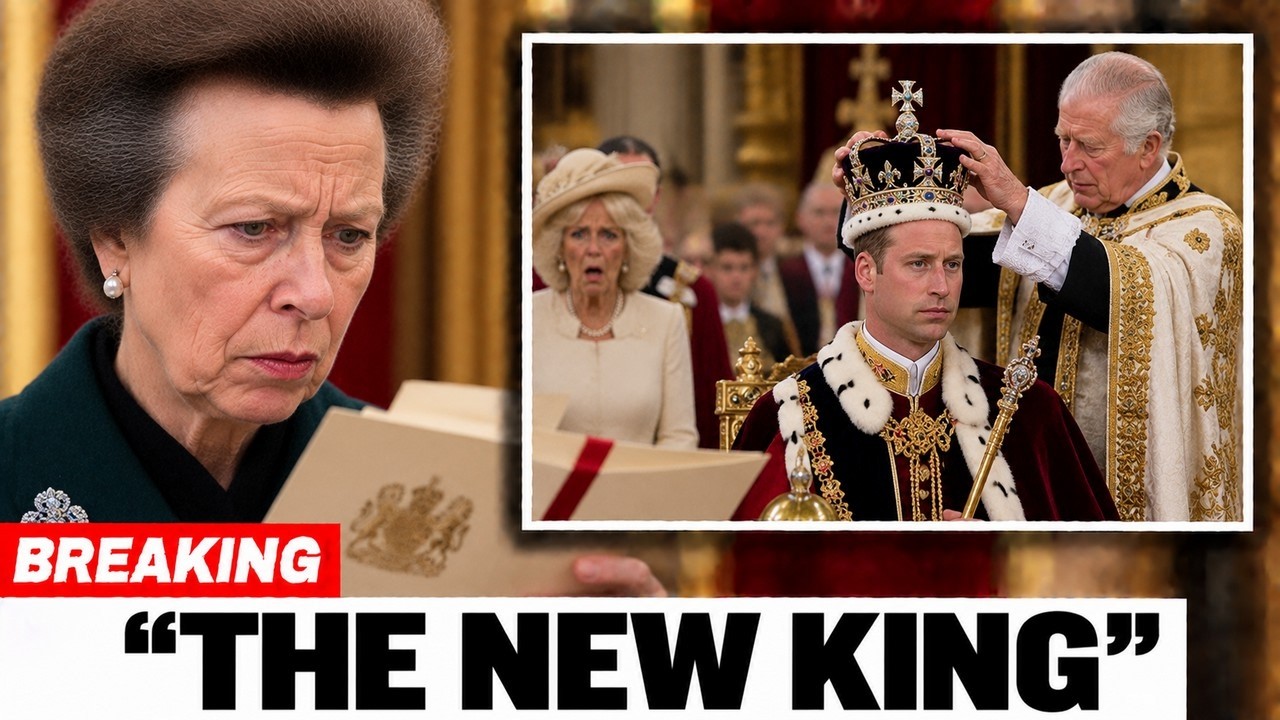
When Anne finally broke the seal, one sentence changed the temperature of the room. Elizabeth had explicitly named Prince William as Britain’s future king. Before we go deeper into what this really means for the royal family, make sure to subscribe so you don’t miss a single update. Anne remains still inside Windsor Castle, the royal residence where monarchs have guarded sensitive family records.
These papers were not ordinary state correspondence. They had been preserved under private instructions written by the late queen herself, limiting who could read them and when. That mattered because this was not gossip. It was a personal judgment from a sovereign who had spent 70 years protecting the institution from fracture.
The princess read the paragraph twice. Her expression tightened as the meaning settled in. Elizabeth had not simply praised a grandson she loved. She had written that William was the figure she believed must one day carry the crown into its next era. The crown in plain terms meant the monarchy and the responsibilities attached to the sovereign.
Charles’s reign was not erased or shortened by those words. Yet the emphasis on his son was impossible to ignore. Charles received the news without anger, but the silence carried more weight than an outburst. He turned toward the window, stayed there for seconds, then asked Anne one question. Did she write his name herself? She answered yes. The king did not respond.
For a man who had spent his life preparing to inherit his mother’s role, the discovery struck at something painfully personal. Not legitimacy, but legacy. Anne looked down again and found that Elizabeth had gone further. The paper was to be shown only to Charles William and a restricted circle when the monarchy entered what she called a period of strain.
Then came the second shock. Beneath the first page lay another sealed sheet marked in her mother’s hand with the words continuity, duty, and the survival of trust. Anne did not open it. Not yet. She sent word that William should come, but Charles insisted he would be there when the second seal was broken.
And as William walked toward the room where his grandmother’s final judgment was waiting, three members of the same family were about to discover that the crown can bind blood together just as easily as it can tear it apart. William entered expecting a private family matter. But the instant he saw Charles seated opposite Anne, he understood that something far heavier was waiting.
No advisers stood behind them. No private secretary filled the silence. Between father and son rested a cream colored page carrying Elizabeth’s unmistakable handwriting. And suddenly three people trained to hide emotion were facing something the monarchy had never taught them how to discuss.
whether duty itself could feel like rejection. Anne watched him approach without speaking. She had always occupied a strange place inside the family, close enough to understand her mother’s discipline, but distant enough from direct succession to be trusted with difficult truths. Succession, the formal order determining who inherits the throne, had never made her arrival to either man.
That was precisely why Elizabeth had trusted her. Yet now the daughter, who had spent years protecting family unity, had become the keeper of words capable of unsettling both her brother and her nephew. Charles moved first. He slid the page across the table without meeting William’s eyes. The prince picked it up slowly and began reading, but when he reached his own name, he stopped.
For most of his adult life, he had known the crown would eventually come to him. He had never expected that future to be described so directly by the grandmother, who had represented continuity itself, and what should have sounded like confidence, instead felt dangerously close to comparison. William lowered the page.
No satisfaction crossed his face, only discomfort. Across from him, the king remained silent, carrying the weight of decades spent waiting to serve and wondering whether his mother had seen his reign as destination or merely passage. Anne understood immediately why the moment hurt. Elizabeth’s words were not legally replacing Charles, but emotionally they had placed extraordinary hope on the man sitting opposite him.
Anne kept studying them both as memories of her mother pressed closer. The late queen had survived by controlling emotion, rarely allowing private fear to interfere with public duty. Yet these papers had done what she herself had avoided in life, forced her children and grandson to confront exactly how she judged the monarchy’s future.
William looked down again and noticed something written along the margin. Elizabeth had described him as possessing the distance required to renew closeness. He read the phrase aloud almost uncertainly. The meaning was unsettling but clear. She believed his willingness to step away from royal machinery when necessary might actually help him reconnect the institution with ordinary people.
Charles finally turned toward Anne. Have you read the second page? She shook her head. Then we read it together. The decision changed everything. This was no longer one man discovering what his grandmother thought of him. It had become a family reckoning. William hesitated before Anne reached for the second seal. Why did she prepare this at all? That question dragged them backward toward a night none of them yet understood fully.
To understand why Elizabeth wrote William’s name with such deliberate certainty, they would have to return to the private incident that convinced her the crown was heading toward a crisis no ceremony could hide. The decision began not with a constitutional meeting, but with a conversation after a family gathering at Windsor.
Long after the formal rooms had emptied, Elizabeth remained seated with William beside a dying fire. Something he said that night disturbed her enough that she later summoned Anne privately and dictated the first notes that would become the sealed papers. Years afterward, everyone would look back on that conversation as the moment the queen stopped assuming tradition alone could protect the monarchy.
Elizabeth had survived decades of scandal, family rupture, changing public expectations, and relentless scrutiny without allowing the institution to lose its center. The monarchy had always relied on continuity, meaning the steady transfer of duty and authority from one generation to the next.
But late in life, she began to fear continuity. Without adaptation, could become weakness. Surviving one crisis was not enough if younger generations stopped seeing the crown as something connected to their own lives. William had already been wrestling with that problem himself. He respected duty deeply, but he feared royal service could become a collection of inherited gestures performed because they had always been performed.
In private conversations with his grandmother, the prince returned again and again to the same concern. Public respect could no longer be assumed. It had to be earned. For him, that mattered because his future role would depend on trust rather than distance. William finally said the words that changed everything. People will respect duty only if they can still recognize the people performing it.
Elizabeth did not argue. She did not reassure him. She simply listened and the silence unsettled him more than disagreement might have. When he left, the queen asked Anne to remain behind. Anne remembered that moment with painful clarity. Her mother moved slowly toward the fire and admitted something she almost never voiced.
The monarchy could survive criticism, scandal, even hostility, but it might not survive becoming emotionally irrelevant. Hearing Elizabeth admit vulnerability in the institution shocked her daughter. This was a woman who had spent a lifetime projecting steadiness. Yet now she was acknowledging that endurance alone might not protect what came next.
Elizabeth’s thoughts soon turned to Charles. She loved her son and respected the patience required to spend decades waiting for responsibility he had been raised to accept. Yet she feared that waiting had shaped him differently from William. The older man had grown within a system built around deference. The younger one had developed under harsher public scrutiny where every gesture was questioned and every silence interpreted.
Anne listened as her mother dictated the first handwritten notes. Elizabeth made one thing clear. These papers were not a legal succession order. Meaning they had no power to change who inherited the throne. They were something more intimate, a personal assessment of how the family should prepare emotionally for the next generation.
Then came the detail Anne had almost forgotten. Elizabeth referred to one conversation Charles must eventually hear for himself. Back in the present, Anne placed her thumb beneath the second seal. William watched her. Charles did not move, and suddenly all three understood that the queen had not left them a prediction. She had left them a confrontation.
The second page landed harder than the first. Elizabeth addressed Charles directly, praising his endurance before warning that the crown after him must become lighter, closer, and less defended by distance. He read the sentence without blinking. William shifted in his chair. Anne remained perfectly still. Then the king placed the paper flat on the table and asked his son the question neither man had expected to confront that day.
Is that what you think, too? Charles knew the page could not remove him from the throne. It was a private directive, meaning a personal instruction with moral weight, but no legal power to change the constitutional line. That distinction mattered because his position was secure, yet his emotions were not. Elizabeth had defined service for an entire era, and now her words seemed to suggest that the monarchy after him would need to become something different.
William answered carefully. He told his father that every monarch inherited a different country and therefore a different duty. The prince chose each word slowly, but Charles heard caution where he wanted comfort. For decades he had waited to serve in his own way. Now the future king was sitting across from him speaking about change as though change itself had already become inevitable.
Anne stepped in before the tension hardened. She reminded her brother that Elizabeth had written about succession of responsibility, not rejection. Succession here meant more than inheriting a title. It meant carrying the institution forward without destroying trust between generations. Charles listened, but the distinction did not soften the blow.
He pushed his chair backward, and the sudden movement broke the control everyone had been trying to preserve. The king turned back to William. Do you believe it must change that much? His son did not retreat. He said, “Accessibility mattered, family stability mattered, and ceremony could not be allowed to become distance.
” The answer was respectful, but it was also honest. Charles looked down again because honesty was exactly what he had asked for and exactly what hurt most. Anne continued reading, and the next instruction changed the balance in the room. Elizabeth wanted William prepared long before accession for a more personally visible style of kingship, one built around fewer barriers and stronger public connection.
She had written that the future depended on people feeling seen rather than managed. Then Charles noticed the final line. Elizabeth had instructed Anne to intervene if resentment between generations threatened unity. The princess read it twice. Her mother had anticipated this moment. Not the exact words perhaps, but the fracture beneath them.
Charles looked at her differently now. Who controls these papers? Anne did not answer immediately. And in that pause, the argument stopped being only about what Elizabeth had written. It became about who had the power to decide what happened next and whether this wound stayed inside the family or entered royal history.
Charles assumed the papers now belong to the sovereign. Anne quietly told him they did not. Elizabeth had separated these documents from routine royal archives and left explicit custodial instructions granting her daughter responsibility for deciding when the family could read them together. For the first time since the seal was broken, he looked genuinely surprised.
His sister had never sought the crown. Yet in this room, she possessed something more unsettling than rank. Their mother’s final confidence. Anne explained that Elizabeth had chosen her for a reason. She was disciplined, private, and removed from any realistic path to the throne, making her far less likely to turn the papers into leverage.
Custody in plain terms meant responsibility for protecting the documents and controlling how they were handled. It did not give her constitutional authority. It gave her something more personal and in that moment more dangerous. Control over when their mother’s words could enter family life. Charles looked at her for a long time before asking the question beneath every other question.
Did she trust you more than me? Anne did not answer quickly. She told him Elizabeth trusted each of her children differently according to what she believed each could carry. The king heard the explanation, but the hurt remained. This was no longer about procedure. It was about how a son measured his mother’s final judgment.
Anne stayed composed until he stepped away from the table. Then her restraint slipped. She gripped the back of her mother’s old chair and stood there in silence, carrying the weight of a duty she had never asked for. Protecting Elizabeth’s instructions now meant risking distance from Charles, and that mattered because loyalty to one person could easily be mistaken for betrayal of another.
Anne finally revealed another instruction. If the papers were opened, William was to receive a copy written in Elizabeth’s own hand rather than a typed transcription. The future king needed to confront the words exactly as she had formed them, not filtered, not softened, not reduced to palace language.
Charles returned as Anne unfolded a short annex attached to the papers. An annex was simply an additional document added to clarify or extend the main instructions. Its message was brief but devastatingly clear. After reading everything, father and son were to meet alone. No advisers, no lawyers, no courters, no family buffer.
Charles rejected the idea at first. William said nothing, but he watched his father closely. Then the king reread Elizabeth’s handwriting, and something in him changed. Slowly, he agreed. Anne understood what that meant. Her mother had removed every layer of protection the monarchy usually depended on.
And when the door finally closed behind Charles and William, rank would no longer be enough to shield either man from what had to be said. Nothing has been announced. Yet the palace already feels different. Meetings are shortened. Papers are moved between rooms with unusual caution. Senior aids notice Charles speaking less and William avoiding unnecessary conversation.
The secret has not escaped the family, but its consequences have. Behind one closed door, the king stares at his mother’s handwriting again. Then folds the copy and places it inside a drawer with a gesture so deliberate that the aid standing nearby immediately looks away. Charles keeps the daily machinery moving, but the tension follows him into every room.
Briefings continue, engagements remain scheduled, and nothing official suggests crisis. Yet that matters precisely because the monarchy depends on continuity. The sense that duty moves forward without visible fracture. If strain between the present monarch and the future king becomes obvious, private pain can quickly become a public question about stability.
The pressure surfaces during a routine briefing. An aid mentions William’s growing public role and the need to coordinate future responsibilities more closely. Charles pauses only for a moment, but long enough for everyone to feel it. Then he nods and continues as though nothing happened. The reaction is small, almost invisible, yet it reveals how deeply Elizabeth’s words have settled inside him.
William carries the conflict differently. He tells Catherine that the papers have left him trapped between two forms of loyalty. The princess listens as he admits he does not want to disappoint his grandmother’s expectations, but he also refuses to make his father feel as though his own reign has already been measured against the next one.
Catherine reminds him that loyalty is not a competition, but even she can see how heavily the distinction weighs on him. William returns to the documents and finds something more practical buried beneath the emotional language. Elizabeth had proposed a smaller working monarchy, meaning fewer senior royals carrying official duties with greater attention placed on a narrower number of causes and deeper public involvement.
The prince recognizes ideas he has discussed privately before, and the discovery unsettles him. His grandmother had not simply imagined change. She had imagined a structure. Charles notices the same thing. As he rereads the notes, he begins recognizing phrases disturbingly close to arguments his son has made in private conversations.
The similarity raises a harder question. Had Elizabeth and William discussed the future more deeply than he ever knew? The thought does not anger him as much as it wounds him. The king makes one decision before doubt can harden into resentment. He will not question his son through advisers.
He will follow his mother’s instruction exactly. By nightfall, the papers are locked away. Catherine has left William alone with his thoughts, and Charles has sent a simple request. No documents, no titles, no witnesses. This time, father and son will speak without the crown standing between them. For once, there is no red box on the table, no secretary taking notes, and no carefully prepared briefing waiting beside the king.
Charles pours two drinks himself and hands one to William. Minutes pass before either speaks. Then Charles admits what the papers made him feel, not threatened by his son, but wounded by the possibility that his mother saw the monarchy’s future more clearly in William than she ever saw it in him. William listens without interrupting.
Elizabeth had asked for this meeting precisely because she wanted rank stripped away from the conversation. Succession in plain terms is the order in which the throne passes from one person to the next. But tonight neither man is discussing law. They are discussing the burden behind it. Charles spent decades being defined by a future he could not control.
While his son grew up watching what that endless waiting did to him, the prince finally speaks. He tells his father he never asked Elizabeth to place him at the center of such a document. He never wanted his eventual reign to be built against Charles’s. As though one man had to diminish for the other to matter. The king looks directly at him then because those words touched the fear neither of them had been willing to name.
Charles admits it plainly. Reading his mother’s praise of William awakened an old dread that his own reign might be remembered only as a bridge between Elizabeth and the next generation. He had waited too long, sacrificed too much, and carried too many expectations to accept becoming a footnote in someone else’s future.
William does not dismiss the fear. He tells him that a bridge is not meaningless if it carries something safely forward, but quickly adds that his father’s reign is not simply a passage. It belongs to Charles. Its choices, its victories, its failures, and its meaning will be his alone.
For the first time since the papers were opened, the king allows the tension in his face to ease. Charles then reveals a decision he has already made. ; ; He will not suppress the existence of Elizabeth’s papers forever. Their exact contents will remain private, protected from public curiosity, but the broader message about continuity and preparation will eventually be acknowledged.
He refuses to let secrecy turn their mother’s words into poison. The king goes further. He tells William that several of Elizabeth’s ideas about accessibility, family stability, and reducing distance from the public will begin shaping his own reign. What first felt like criticism will instead become shared inheritance.
William accepts that without triumph, the prince understands the difference, but private reconciliation cannot control public interpretation forever. And once word of Elizabeth’s papers begins moving beyond palace walls, four explosive words will overwhelm every careful distinction they have made. William, future king.
By sunrise, the secret is no longer entirely private. A newspaper front page appears beneath the lights of London kiosks carrying four enormous words. Elizabeth, named William, future king. Television studios abandon their planned schedules. Cameras gather outside Buckingham Palace. At Windsor, visitors pause behind barriers, holding phones toward the gates as broadcasters debate what the papers mean.
Inside the royal household, Anne watches the coverage in silence. Knowing a family document has become a national symbol overnight. Charles understands immediately how dangerous the headline can become. He remains monarch and William remains heir, meaning the next person in line to inherit the throne.
Nothing in Elizabeth’s private papers has legally changed that order. But public emotion rarely waits for constitutional nuance, and the force of her endorsement is already overwhelming the careful distinction between personal belief and formal succession. Anne follows the coverage closely as palace communications prepare a restrained response.
The statement makes one point clear. Elizabeth’s reflections were private guidance, not a legal mechanism for removing or replacing anyone. That matters because the monarchy depends on continuity. And even the appearance of a struggle between present and future king could turn a family wound into a national crisis.
Outside Buckingham Palace, the story becomes painfully human. A small crowd gathers as screens replay the same headline again and again. One older woman presses a photograph of Elizabeth against the barrier and tells a reporter that the queen always thought generations ahead. Her words travel quickly because they capture what many people are feeling.
The story is no longer only about documents. It is about memory. trust and what people believe the late monarch was trying to protect. Charles watches part of the coverage before switching off the television himself. He does not lash out. Instead, he tells an aid that William must not be forced to answer publicly for words written by his grandmother.
The decision marks a change in him. Days earlier, the papers felt like judgment. Now he is protecting his son from the weight of that judgment. Anne makes the next move. She authorizes confirmation that Elizabeth left private reflections concerning the monarchy’s future, but she refuses publication of the intimate pages themselves.
Her choice protects the family while acknowledging that the documents have historical importance. William then appears publicly beside Charles. The prince gives no speech about the papers and the king offers no explanation. They simply stand together, speak briefly, and face the public as one family rather than two competing generations.
That image changes the meaning of everything. The headlines had created a contest Elizabeth never wrote, but the family is beginning to answer with unity instead of rivalry. And now only one question remains. What did her final message actually mean? Weeks after the shock has faded, Anne returns the original papers to their protective case. The room is quiet again.
Charles has resumed his duties. William has stopped carrying the copy everywhere he goes. The furious headlines have moved on. Yet, Elizabeth’s words have changed all three of them permanently because the family finally understands what she was trying to preserve. She was not choosing one king over another.
She was demanding that each generation prepare the next without fearing it. Charles now reads the document differently. What first felt like criticism begins to feel like guidance because the queen’s real concern was continuity. The careful passing of responsibility from one reign to the next without allowing rivalry to poison the transition.
That matters because a monarchy survives not only through law and ceremony but through trust inside the family expected to carry it forward. William reaches the same conclusion from the opposite direction. Being named in his grandmother’s private papers no longer feels like elevation. It feels like weight.
The prince understands that Elizabeth did not give him permission to hurry history. She gave him a warning about the responsibility waiting whenever his time eventually comes. Charles responds by inviting his son into a regular series of private conversations about the monarchy’s long-term direction. The king does not surrender authority, and William does not pretend to possess it.
Their discussions remain imperfect, sometimes tense, sometimes painfully honest. But something essential has changed. Neither man now treats the other’s place in the story as a threat. Anne finds closure more quietly. She returns the handwritten pages to safekeeping and pauses over Elizabeth’s signature one final time.
The princess touches it gently before closing the case. Her duty had never been to choose between brother and nephew. It had been to make sure both men heard what their mother and grandmother believed before resentment could turn silence into permanent damage. The deepest meaning of Elizabeth’s message finally becomes impossible to misunderstand.
She was never obsessed with the name of the next monarch. She feared something far more human. that inheritance without emotional preparation could become a burden heavy enough to damage both the person wearing the crown and the family standing around it. William keeps his handwritten copy, but he never treats it as a mandate.
The future king keeps it as a reminder that service must come before ambition. Charles accepts that preparing his son does not shorten his own reign. Anne accepts that carrying their mother’s final confidence has finally reached its end. Elizabeth’s sealed papers seemed at first to contain a choice between two kings. In the end, they contained something far more powerful.
A mother’s warning, a grandmother’s faith, and a final command that the crown must pass from one generation to the next, not through rivalry, but through understanding. Thanks for watching. Please don’t forget to like and subscribe and we will see you in next